Fully Alive

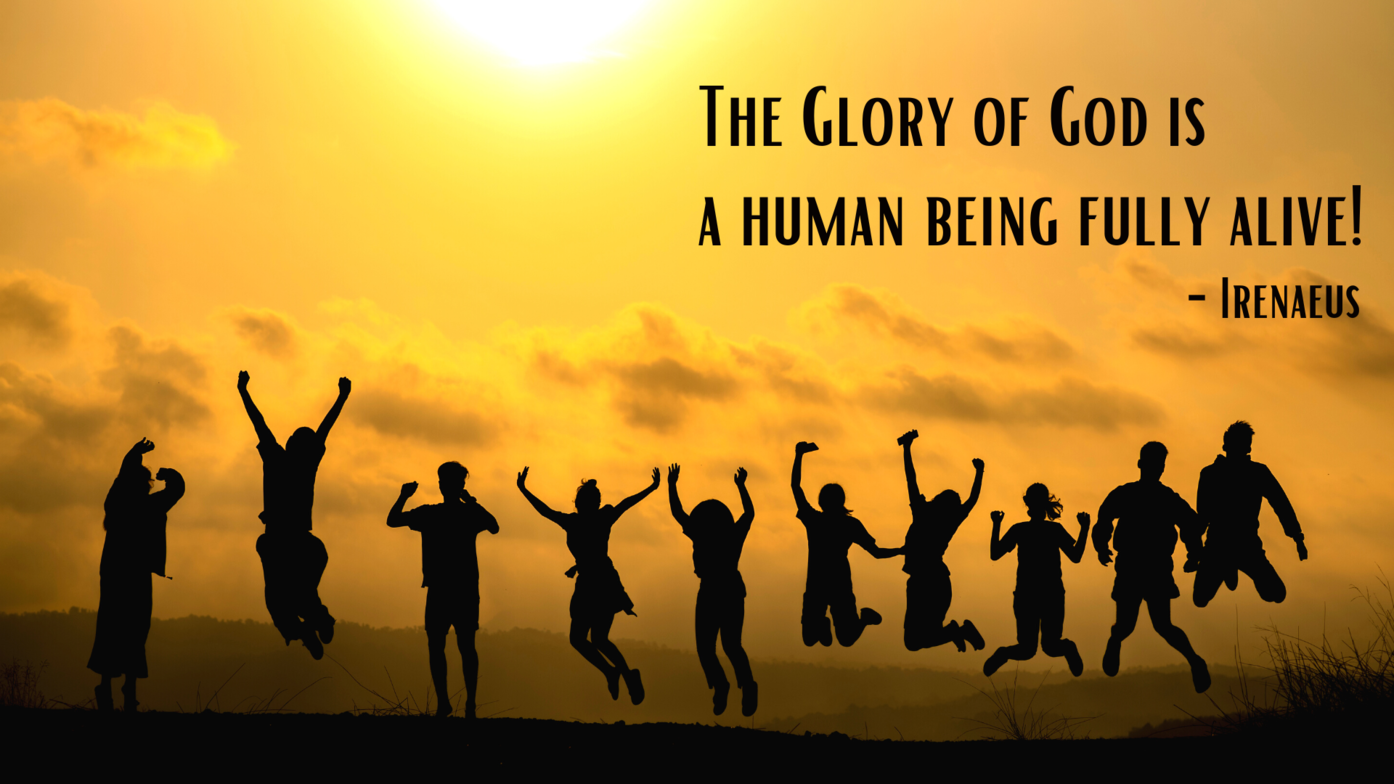
In 185 CE, Irenaeus, then Bishop of Lyons, finished the most important of his writings. The book, entitled Against Heresies, is noteworthy for containing the first listing of the 27 books that would come to comprise the New Testament. Additionally, it is the source of one of Irenaeus’ most well known quotes, namely, The glory of God is a human being fully alive.
Talk about digging down to the roots of faith. Here we have a non-biblical source which predates the era of the Roman Emperor, Constantine, when the Christian faith was coopted by Rome. Irenaeus’ book, far from painting humankind with an evil, sinful brush, reveals God’s intimate joy and desire for us to be fully alive human beings. Fully Alive! Which brings us back to our questions. What does it look like for us to become fully human and, not just that, but fully-alive human beings?
There’s a story common to the three Synoptic gospels about someone who comes to Jesus and asks, “What must I do to inherit eternal life?” In two of the Synoptics Jesus responds by giving a recitation of (some of) the commandments. In the Gospel according to Luke it is Jesus’ inquisitor who answers by summing up the commandments as essentially love God and love neighbor. Jesus then responds by saying Good answer. Do this and you shall live. Notice Jesus doesn’t say, do this and you will have eternal life. No, Jesus says and you will live. Jesus seems way more focused on living now this life in this moment here on earth. And doing so with love.
Could it really be that simple and yet that challenging? Could it really be that loving God and loving neighbor is the way in which we become fully human and fully alive?
-
Location